The Truth About GLP Support Nobody’s Telling You

Why GLP Support Isn’t Working the Way You Thought It Would

Why Your Scale Stopped Moving (Even Though the GLP-1 Is Still Working)

Hey friend, let’s talk about the thing I know a lot of you are quietly wondering about right now: why did my weight loss stop?

If you’re on a GLP-1 and the scale has been sitting in the same spot for weeks, I want you to hear this before anything else — you didn’t do anything wrong. This isn’t a willpower problem, and you’re not the exception to the rule. What you’re experiencing has a name, a mechanism, and real research behind it. So let’s actually walk through it together, the way I would if you were sitting across from me at this table or on a  client zoom call.

I’m going to get a little nerdy in places, because this deserves more than “just eat less and move more.” You’re smart, you’ve done the hard part, and you deserve the real explanation — not another vague Instagram caption so lets dig in!


First, the honest truth about the medication

I’ve said this before and I’ll keep saying it: GLP-1’s are a tool. Not a cheat code, not a shortcut, not a moral failing to need one. The mechanism is straightforward — it helps put your body in a calorie deficit by quieting appetite and slowing digestion. That’s it. That’s the whole job description. Yes there are other anti-inflamatory responses and adaptations that happen but that is the big lift.  The main thing!

Which means everything that happens around the medication — your food, your muscle, your metabolism — is still very much up to the body’s own rules. And your body has some pretty stubborn rules when it comes to losing weight.  I know you know this. That is probably a lot of why you CHOOSE to use this tool.  The mechanics of losing weight can be challenging and complicated.  I see you, but we are going to try to simplify it.

Rule #1: Your metabolism adapts to less food, on purpose

Here’s the piece almost nobody explains clearly. When you eat less for a sustained period, your body doesn’t just sit there passively burning the same number of calories. It recalibrates. Researchers call this metabolic adaptation (sometimes “adaptive thermogenesis”), and it’s been documented for decades — starting with the Minnesota Starvation Experiment in the 1940s and confirmed again and again since.

One of the most well-known modern examples comes from a study that followed contestants from The Biggest Loser years after the show. Their resting metabolic rate dropped by an average of 610 calories a day by the end of the competition — a decline larger than their weight loss alone could explain — and much of that suppression was still present six years later. A separate analysis of the CALERIE trial (a rigorous, 12-month controlled feeding study) found that resting metabolic rate dropped by roughly 100 calories a day with weight loss, and about 40% of that drop wasn’t explained by the loss of body tissue itself — it was the body actively turning down the dial.

In plain terms: your body doesn’t know the difference between “intentional weight loss” and “famine.” So when calories stay low for a long stretch, it quietly resets its idea of what “maintenance” means, and adjusts downward to protect itself. That’s not a flaw in you. That’s a wildly effective survival mechanism doing exactly what it is designed to do.

Rule #2: Muscle is the first thing to go if you’re not protecting it

This is the part that keeps me up at night as a coach, because it’s so preventable and so rarely discussed at the prescriber’s office.

Body composition sub-studies from the major GLP-1 trials — STEP 1 for semaglutide and SURMOUNT-1 for tirzepatide — found that roughly 25 to 45% of total weight lost was lean mass, not fat. That’s a strikingly consistent finding across the research since: multiple case series and systematic reviews put the number in the same 25–40% range. That ratio isn’t unique to GLP-1s — it happens with any significant, relatively fast weight loss — but because GLP-1s produce larger total weight loss, the absolute amount of muscle at stake is bigger too.

Why does this matter for your plateau specifically? Because muscle is metabolically expensive tissue — it’s part of what determines how many calories your body burns just existing. Lose muscle, and you lose some of your engine along with the weight. That compounds the metabolic slowdown from Rule #1.

The encouraging part: this is one of the most fixable pieces of the whole puzzle. A 2015 study in the American Journal of Clinical Nutrition found that a high-protein, high-leucine supplement preserved muscle mass in older obese adults during intentional weight loss, and more recent case series specifically in GLP-1 patients have shown lean mass can be maintained — even gained — when people combine adequate protein (roughly 1.6–2.3 g per kilogram of fat-free mass) with resistance training three to five days a week. Clinical trials are now underway (the LEAN-PREP study, for one) specifically testing resistance training and protein intake as a countermeasure during semaglutide and tirzepatide treatment. The mechanism is being taken seriously enough that researchers are actively racing to solve it — which tells you it’s real, and it tells you it’s solvable.

Rule #3: The quiet part — “food noise” going down doesn’t mean intake is optimized

One of the things GLP-1s do best is turn down what’s now being called “food noise” — the persistent, intrusive mental chatter about food that has nothing to do with actual physical hunger. Researchers have started studying this formally; a large survey of people on semaglutide found a sharp, measurable reduction in food noise, and brain imaging studies show decreased activity in food-craving-related reward circuits on the medication.

This is genuinely one of the most life-changing effects of these drugs for the people who’ve struggled with it. But here’s the catch: less food noise can also mean less attention to food altogether — smaller meals, skipped meals, and a quiet slide toward inadequate protein and calories without anyone noticing, because the usual internal alarm bells (hunger, cravings) have gone quiet too. That’s how someone can end up under-fueling without ever consciously deciding to.

The pitfall nobody wants to admit: sometimes it’s still just too much food

I need to say this next part gently, but honestly, because I think it gets skipped over in almost every GLP-1 conversation I see online.

Not every stall is metabolic adaptation. Not every stall is muscle loss. Sometimes — and I’ve sat across from clients where this was exactly it — the real answer is simpler: they’re still eating more food than their body needs, even on the medication.

Here’s why this happens, and why it’s not a character flaw. If years of habits were built around eating when you weren’t physically hungry — stress eating, boredom eating, eating on autopilot with highly calorie-dense foods — those habits don’t just vanish the moment a prescription starts. GLP-1s quiet a lot of the physical hunger signal, but eating driven by habit, emotion, or environment doesn’t run on hunger signals in the first place. It runs on cue and routine. So someone can genuinely feel less hungry and still find themselves reaching for the same calorie-dense foods out of habit — just a little less often, or in slightly smaller portions — and the math still doesn’t work out to a deficit.

This is the part I think gets lost in a lot of the marketing around these medications. A GLP-1 is not an easy button. It doesn’t erase the calories in a splurge, and it doesn’t override the basic physics of weight management: you still need to be in a genuine calorie deficit, taking in less energy than you burn, for the scale to move. If someone is indulging regularly, eating past fullness out of habit rather than hunger, or simply moving less than they think they are, they can be fully compliant with their medication and still land at maintenance calories or above — and no amount of appetite suppression will produce fat loss from there. The medication can make the deficit easier to create. It cannot manufacture the deficit on its own if the food side of the equation doesn’t line up.

This is exactly why “am I actually eating less than I’m burning” has to stay part of the conversation even after starting a GLP-1 — not because it’s about willpower, but because it’s about whether the mechanism the drug relies on (a calorie deficit) is actually in place.

So what actually fixes a stall?

Not more restriction. That’s the instinct — cut further, try harder — and it’s exactly the wrong direction once your body has already adapted downward.

What I coach clients through instead is a structured, cyclical approach, rather than one long, straight line of restriction:

Phase 1 — Focused Fat Loss. A real, sustainable calorie deficit for a set window (often around 8–12 weeks), anchored by adequate protein and resistance training to protect muscle. This is also where we take an honest look at intake — even briefly tracking food for a week can reveal whether the deficit the medication is supposed to be creating is actually there, or whether habitual eating has quietly closed the gap.

Phase 2 — Reverse. Calories come back up deliberately, restoring the body’s sense of safety and rebuilding maintenance at a higher, more sustainable number.

Phase 3 — Return to Fat Loss. From that restored baseline, we cycle back into a deficit — and the body responds again, because it never got the chance to shut all the way down.

I want to be straight with you about the research here, because I promised you the real version, not the Instagram version: the idea that reverse dieting directly “boosts” your metabolism is supported but not blatantly obvious— most overfeeding studies show only small, mostly weight-driven increases in energy expenditure, not some dramatic metabolic reset. Where the evidence is genuinely encouraging is in adherence and sustainability. A 2025 study in the Journal of the International Society of Sports Nutrition compared a reverse-dieting approach against jumping straight back to maintenance calories, and found meaningfully better adherence and lower attrition with the gradual approach. In other words — the value of reverse dieting may be less about tricking your metabolism and more about giving your body and your habits room to actually stick, so you’re not white-knuckling a restrictive diet indefinitely or swinging wildly between extremes.

That distinction matters. I’d rather tell you the honest, slightly less dramatic truth than sell you a metabolism myth.  What I do know is this system and approach works. I have seen clients continue to lose weight even in a reverse diet. It keeps them consistent. It keeps them compliant. We have helped clients lose over 100 lb even without GLP support using this exact method. Eating plenty of food to sustain performance, longevity, muscle mass and quality of life!  Amen to that my friend!


Coach’s Corner

Before you decide a stalled scale means something has gone wrong with you or your medication, I want you to sit with this: a plateau is information, not an indictment.

Your body isn’t broken, and you are not failing at something that’s supposed to be simple. You’re running into a well-documented, well-researched physiological response — one that has a name, a mechanism, and a body of science behind it, and one that responds to the right adjustments, not to more willpower.

GLP-1 support creates the opportunity for the work to finally work. It was never supposed to do all of it alone. That’s not a knock on the medication — it’s just an honest description of what it’s for.

If you’re on a GLP-1, doing everything you know how to do, and the scale still isn’t adding up — please hear this the way I mean it: it’s not a willpower problem, and you’re not the exception. You may simply be missing the nutrition and training guidance most prescribers don’t have the time or training to give you.

That’s exactly what coaching is for.  Please reach out if you would like some guidance on your personal journey.  We are here to help!

With Love, Amie


References

  • Fothergill, E. et al. (2016). Persistent metabolic adaptation 6 years after “The Biggest Loser” competition. Obesity, 24(8).
  • Martin, A. et al. (2022). Tissue losses and metabolic adaptations both contribute to the reduction in resting metabolic rate following weight loss. International Journal of Obesity.
  • Wilding, J.P.H. et al. (2021). Once-Weekly Semaglutide in Adults with Overweight or Obesity (STEP 1). New England Journal of Medicine, 384, 989–1002.
  • Locatelli, J.C. et al. (2024). Resistance training preserves lean mass during weight loss with GLP-1 receptor agonists: systematic review. Obesity, 32, 1234–1247.
  • Verreijen, A.M. et al. (2015). A high whey protein, leucine, and vitamin D supplement preserves muscle mass during intentional weight loss in obese older adults. American Journal of Clinical Nutrition, 101, 279–286.
  • Preservation of lean soft tissue during weight loss induced by GLP-1 and GLP-1/GIP receptor agonists: A case series. PMC.
  • LEAN Mass Preservation With Resistance Exercise and Protein During Semaglutide/Tirzepatide Therapy (LEAN-PREP Study). ClinicalTrials.gov, NCT06885736.
  • Moser, M. et al. (2025). Survey on GLP-1 receptor agonists and food noise reduction. Diabetes, Obesity and Metabolism.
  • What Is Food Noise? A Conceptual Model of Food Cue Reactivity. PMC.
  • Rodriguez Da Silva, V. et al. (2025). The effects of reverse dieting on mitigating weight regain after a caloric deficit: a preliminary analysis. Journal of the International Society of Sports Nutrition.
  • Adherence and compliance rates across post-dieting strategies: a preliminary analysis. PMC.

This article is for educational purposes and reflects general research findings. It is not a substitute for personalized medical or nutritional guidance from your prescribing provider or coach.


Just because someone knows how to create a nutrition plan or macro prescription for you does not mean they are a good coach.

Ok so maybe there is a little bit of bait here in my title. But to be honest I’m sharing some challenging and vulnerable feelings here.

1- We are worth EVERY PENNY we charge. Going into my personal fat loss journey I was contemplating adjusting our pricing at Summit health. The economy is tumultuous, we want to help as many people as possible and health coaching can be expensive. I was starting to feel like we needed to adjust our monthly pricing so that more people could afford the coaching we offer. After going through my personal journey with a coach, I am 100% confident in offering what we do at the price point we do!!!

2- Transparency & Honesty Matters. I felt strongly that I wanted my Coach to be looking at my food diaries. I knew it would keep me more focused and engaged in filling my plate with good macros and micros. Never once did she take a look at my food diaries. And to be honest for the first three weeks, I filled a lot of my carbs with ounces of wine. Because I could. Never got called out on it. Never was it mentioned but I knew she didn’t know because she wasn’t looking. All she was looking at was the numbers. And to be honest, that’s what truly matters so in her defense, she was looking at the most important things. However, when I decided that I’m on this journey for myself, and not for anyone else, I started to shift my focus from just hitting the number to filling my plates with more healthy, wholesome carbs and I virtually eliminated the wine. And lo and behold…. Things moved more quickly, and I felt so much better. Which leaders to my next lesson.

3- What will fill our Macros with matters. When we coach clients, we not want to know how much they’re eating, but we want to know what they’re eating because those are factors that influence their overall health. We’re not here just to help you lose weight. We are here to help you be a healthier human!

4- We have to do our homework and trust me WE DO! The fourth lesson I learned in working with my own coach is doing our homework matters. When we on-ramp a new client, it is so important to have them keep a food diary prior to us working together. Not only is it important for us to evaluate how much they’ve been eating consistently But what their dietary preferences are. Are they someone who really enjoys more simple carbs or are they someone who really leans into a more Paleo eating style with more rich, healthy fats. Why does it matter??? it matters because when we create a plan for you, that plan is tailored specifically to your preferences and needs. I could create a generalized nutrition prescription based on what I know our body scientifically need and based on my education. And it would be a good plan. However, it would not be tailored to the foods you enjoy eating, so is that plan going to be more challenging to follow absolutely. This is why working with a coach who creates a personalized plan for you matters. Being able to be compliant and consistent in following that plan is so much easier when it follows the things you already enjoy eating!

5- Be ready to be uncomfortable! I did not want to send weekly progress photos. I felt it was arbitrary data and there’s no way things were going to change week to week. And I did not like doing it. But it did I do it? Yes, I told you I was all in. In the end, it desensitized me to doing this and helped me see the need and value for more consistent metrics for progress. We ask clients for progress photos and often times these can be the hardest to obtain. It’s so uncomfortable for clients to do this. Let alone share them. For change to happen – things have to change and that can be uncomfortable!! So lesson learned. My willing to sit in discomfort, helps me honor and appreciate clients who are willing to be uncomfortable and vulnerable when it comes to their journey. We appreciate you!

A very successful fat loss phase with a not so great Coach truly helped me remember that what matters most is consistency. It’s not so much the plan but how well we follow the plan.

However, having an amazing competent qualified coach matters! I was looking forward to leaving my journey, having learned something made and an awesome connection and relationship and be one step further in my knowledge and education. Even though that didn’t happen….

I’m beyond grateful to be able to offer and share the awesome work that we get to do everyday with some amazing clients!!

1-Hired a coach (yes I’m a coach and I could absolutely set my own plan, but I knew I needed someone to be accountable to and to call me out when needed)

2- I said “NO” to a lot of things. I knew if I wanted to see results I had to commit! I legitimately had three months in my mind and knew I could go all in for that short amount of time. I said no to heavy cream in my coffee. I said no extra late night snacking. I said no to nut butters. Can these things be part of a fat loss phase, absolutely, but for my plan, they did not fit and I was committed even though I enjoy everyone of these! It’s just like a budget sacrifices have to be made somewhere. You just simply decide where!

3- I followed the plan! There were 7 days out of 90 that I did not hit my numbers spot on! If I’m being honest, in my opinion, her plan….not great! It didn’t take into consideration the foods I prefer to eat or how I was eating previously to starting this cut. I felt like she put me in a box and created a “generalized” macro prescription and that was it. However, I committed. I followed her plan. I didn’t ask for changes or adjustments. I legitimately went all in. And lookey 😳 there….it worked!!!! 🫣More in this later friend. 😘

4- I focused on Protein & Produce first!!!! Obviously protein because that was part of my nutrition prescription. I knew it would maintain my lean muscle and keep me full and produce to keep me satisfied. I knew going into a fat loss phase I was likely to be more hungry so I knew I had to fill my meals and snacks with lots of produce, especially veggies so that I was HANGRY!

5- I trusted the process. To be honest, four weeks and very little had changed. But after those four weeks of continuing to remain consistent things just felt like they almost shifted overnight. I didn’t remain consistent because I had an amazing coach. I remain consistent because I knew the science of fat loss and I knew most people quit just before the finish line. I knew my deficit was accurate and I knew if I remain consistent, there’s no way I would not see results. And I did.

Fat loss phases can be challenging.

I’m thankful for this experience and all of the others that I have had through my journey. As nutrition and health coaches our personal experiences with our own nutrition journeys give us so much insight into coaching our own clients.

We understand the challenges, how arduous it can be, and we understand the dedication and commitment it takes.

More to come on lessons learned from this.

Crunchy Taco Skillet

  • 1 pound ground beef One packet taco seasoning, or your own homemade taco seasoning
  • 1/2 cup salsa Verde
  • 2 cups chicken broth or chicken bone broth is my preference
  • 1 cup white rice
  • 1 cup shredded cheese – I have skipped this and it’s perfectly delicious

Cook your ground beef. Add in taco seasoning and your salsa Verde. Throw in your chicken broth and rice.

Cover and let simmer for another 12 to 15 minutes and serve with sour cream or my favorite Greek yogurt as a side. Crunchy, whole-grain tortilla chips, fresh avocado, cilantro, black olives, or some homemade pico or any other taco toppings you like. If you’re The Chad ketchup. 😳🤔

We’ve all been there. It’s midweek, you’re juggling work, family, and a dozen other responsibilities, and the last thing you want to do is spend an hour in the kitchen cooking a healthy meal. That’s when the drive-thru or delivery apps start to look like the quickest (and most tempting) solution. But what if I told you there’s a way to make eating well a lot easier, even when life is crazy busy?

Enter: Batch cooking your proteins.

The Power of Batch Cooking

Batch cooking is essentially prepping a large quantity of a food item at once so that you have it ready to go for meals throughout the week. When it comes to proteins—whether it’s chicken, beef, tofu, or beans—batch cooking can be a game-changer for your nutrition. Here’s why:

  1. Saves Time and Energy
    • Imagine this: You cook a large batch of chicken breasts or ground turkey on Sunday, and now you have enough protein ready for several meals. This not only saves you time during the week but also spares you the mental energy of deciding what to cook each day. With your protein already prepped, putting together a healthy meal becomes as easy as reheating and adding some veggies or grains.
  2. Prevents Poor Food Choices
    • When you’re tired and hungry, it’s easy to reach for something quick and unhealthy. But if you’ve got a batch of cooked proteins waiting for you in the fridge, you’re more likely to throw together a balanced meal instead. A bowl of reheated protein with a side of pre-washed greens or microwaved veggies is faster—and healthier—than waiting for delivery.
  3. Portion Control Made Easy
    • Batch cooking also allows you to portion out your proteins in advance, making it easier to stick to your nutritional goals. Whether you’re aiming to increase your protein intake or just maintain a balanced diet, having pre-portioned servings helps you stay on track without having to measure and weigh every time you eat.
  4. Versatility in Meals
    • One of the best things about batch-cooked proteins is their versatility. That batch of grilled chicken you made? It can be turned into salads, wraps, stir-fries, or even added to soups. Having a base protein ready gives you the flexibility to mix up your meals without spending extra time in the kitchen.

How to Get Started

Getting started with batch cooking is easier than you might think. Here’s a simple plan to try out:

  1. Pick Your Protein: Choose one or two proteins you enjoy and that can be used in various dishes. Chicken, ground beef, tofu, or beans are great options.
  2. Cook in Bulk: Prepare your chosen protein in a way that’s versatile. Grilling, baking, or sautéing are all good options. You can even season half one way and the other half differently to keep things interesting.
  3. Portion and Store: Once cooked, divide the protein into portions that work for your meals. Store them in airtight containers in the fridge or freezer, depending on how soon you plan to use them.
  4. Plan Your Meals: With your protein ready, think about what veggies, grains, or other sides you can quickly pair with them. Prepping these in advance can further cut down on your cooking time.

Conclusion

Life gets busy, and it’s easy to let nutrition fall by the wayside. But with a little planning and batch cooking, you can set yourself up for success. Prepping your proteins in advance is like giving yourself a head start on the week. It makes healthy eating more convenient, less stressful, and ultimately, more sustainable.

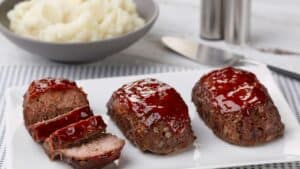
Ina Gartin’s Mini Meat Loaves

Ingredients

Instructions

  1. Preheat the oven to 350 degrees F. Heat the olive oil in a medium saute pan. Add the onions, thyme, salt, and pepper and cook over medium-low heat, stirring occasionally, for 8 to 10 minutes, until the onions are translucent but not brown. Off the heat, add the Worcestershire sauce, chicken stock, and tomato paste. Allow to cool slightly.
  2. In a large bowl, combine the ground chuck, onion mixture, bread crumbs, and eggs, and mix lightly with a fork. Don’t mash or the meatloaf will be dense. This is Key!!! Do NOT over mix it.
  3. Divide the mixture into 6 (10 to 11-ounce) portions and shape each portion into a small loaf on a sheet pan. Spread about a tablespoon of ketchup on the top of each portion. Bake for 40 to 45 minutes, until the internal temperature is 155 to 160 degrees F and the meat loaves are cooked through. Serve hot.

They will have a “fat pool” around them on the parchment paper. Just scrape that off and throw it away and serve warm with garlic mashed potatoes and the roasted Roma tomato recipe linked her

Enjoy friend. This is one of our favorites.


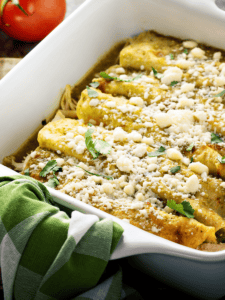
Green Chilli Enchiladas

Easy. Yummy. A recipe your family will LOVE!

Green Chilli Chicken Enchilada’s

Ingredients

  • For the Sauce: 1 Jar of t 505 Southwestern Hatch Green Chillies
  • 1 tsp salt
  • 1/2 tsp ground cumin
  • 1 cup chicken bone broth fresh pepper to taste
  • 1 package low-fat cream cheese
  • 1 tsp cumin
  • 1/2 tsp dried oregano
  • 1 cup chicken broth
  • 2 Cups Pepper Jack Cheese

For the enchiladas:

  • 1 package corn tortillas
  • non-stick cooking spray
  • 2 tbsp chopped cilantro for topping
  • 2 Cups Mozzarella for top

For the chicken filling:

  • 5lbs cooked shredded chicken breast
  • 2 cup diced onion
  • 4 large clove garlic, minced
  • salt and pepper to taste

Directions

  • Cook chicken breast in the instant pot (however you like to cook yours) and shred.
  • In a medium saucepan, spray oil and sauté garlic and onions.
  • Add cooked chicken, cumin, chicken broth, salt and pepper.
  • Bring to a boil.
  • Reduce the heat to low and simmer for 5-10 minutes.
  • Set aside until ready to use.
  • Add in 2 Cups of cheese to filling
  • Preheat oven to 400 degrees.
  • Spray a 13 by 9-inch glass baking dish with non-stick spray.
  • Put 1/3 cup chicken mixture into each tortilla and roll it.
  • Place on baking dish seam side down, top with sauce & cheese.
  • Cover with aluminum foil and bake in the oven on the middle rack for 20-25 minutes.
  • Top with greek yogurt as a sour cream sub and cilantro if you wish.

Certainly! Here’s a list of some great pre and post-workout snacks to fuel your fitness journey:

Pre-Workout Snacks:

Banana with almond butter
Greek yogurt with granola
Oatmeal topped with berries
Whole grain toast with avocado
Energy balls made with nuts and dates
Apple slices with peanut butter
Rice cakes with hummus
Smoothie with spinach, banana, and protein powder
Trail mix with nuts and dried fruit
Whole grain crackers with turkey slices or cheese.

Post-Workout Snacks:

Protein shake with whey or plant-based protein powder
Grilled chicken or salmon with sweet potatoes
Cottage cheese with pineapple or berries
Quinoa salad with vegetables and chickpeas
Greek yogurt with honey and nuts
Tuna or chicken wrap with whole grain tortilla
Hard-boiled eggs with whole grain toast
Chocolate milk or a protein smoothie
Hummus with carrot sticks or whole grain pita bread
Grilled tofu or tempeh with roasted vegetables.
Remember, these are just some ideas, and you can mix and match according to your taste preferences and dietary needs. It’s essential to find snacks that provide a good balance of carbohydrates and protein to fuel your workouts and support muscle recovery. Stay hydrated, listen to your body, and enjoy your fitness journey


Protein synthesis is your body’s ultimate repair system! 💪🛠️ It’s the amazing process where amino acids come together to create proteins, mending those hard-earned muscles you’ve worked so hard for. Whether it’s exercise or just your daily routine, protein synthesis keeps you in top shape! 💥

🍺 A Disruptive Force: Alcohol’s Impact 🚫🍻

But wait, here’s the plot twist! 🔄 When alcohol enters the picture, it throws a wrench into the gears of protein synthesis. 🚫🔧 It doesn’t matter how clean your diet is, the introduction of alcohol tips the scales away from muscle growth and towards protein breakdown. 😱

🥗🍗 No Cheat Codes: Good Nutrition Alone Can’t Help 🚫🍹

Even if you’re rocking a diet filled with wholesome, unprocessed foods that support muscle growth, adding alcohol into the mix still sabotages your gains! 😫🚫 Your body needs more protein synthesis than breakdown to build muscle, and alcohol disrupts this balance. Good nutrition alone can’t offset the negative impact of alcohol. 🙅‍♂️

⚖️ Hormone Havoc: Alcohol’s Ripple Effect 🌊

As if that wasn’t enough, alcohol messes with your hormone regulation too! 😱 It spikes cortisol, the muscle-breakdown hormone, while suppressing testosterone, the muscle-building superhero! 🦸‍♂️📉 This unfortunate combo leads to increased muscle breakdown and makes it harder for your muscles to recover after a workout. Cheers to gains? Not quite! 🍻🚫💔

📚 Conclusion: Do the Math, Skip the Drink! ➕🍹

Here’s the equation for success: Less alcohol + more protein synthesis = Maximum gains! 📈💪 So, if you’re serious about achieving your fitness goals, it’s time to say no to that drink and yes to a powerhouse protein synthesis process! 🚫🍹✅

🔓 Unlock your full muscle-building potential by prioritizing protein synthesis and leaving alcohol out of the equation! 🗝️💪


INGREDIENTS

  • 1 cup Ice (125g)
  • 1/2 cup Cashew Milk (125g)
  • 1 scoop Protein Powder (30g)
  • 1/3 cup Frozen Zucchini (50g)
  • 1/3 cup Frozen Mixed Berries (50g)
  • 1/8- 1/4 tsp Kosher Salt
  • 1/8 tsp xanthan gum (optional for thickening, 40 g frozen banana works well too!)

   Toppings:

  • 1/4 cup Strawberries, chopped (30g)
  • 1/4 cup Mango, chopped (30g)
  • 1/4 cup Blueberries (30g)
  • 1/4 cup Bannanas, sliced (30g)
  • 1 TBS Peanut Butter, drizzled (15g)
  • 1 tsp Toasted Almonds (5g)
  • 1 tsp Chia Seeds (2g)
  • Pinch of Flake Salt

INSTRUCTIONS

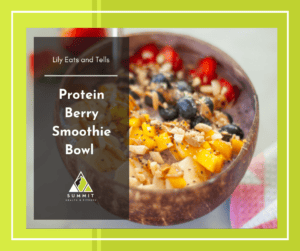
  • Add all smoothie ingredients in your blender and blend until smooth. You might need to use your tamper if you have one to keep it moving. I use my Ninja IQ, and give it a few shakes mid-blend.
  • Top with your favorite toppings! Or mine. haha.

NOTES

You can search this recipe in My Fitness Pal  with or without the toppings:

MFP: Lillie Eats and Tells Berry Protein Smoothie Bowl NO TOPPINGS

159 cal, 13c, 1.3f, 23.5p, 3 fiber

MFP: Lillie Eats and Tells Berry Protein Smoothie Bowl with toppings

NUTRITION

Fiber: 3g
Calories: 159kcal
Fat: 1.3g
Protein: 23.5g
Carbohydrates: 13g
I love cashew milk in this recipe but have used oat milk also.

And I know your weirded out by the zucchini but trust me….it works! You will not even know its there!